Marketing Fundamentals: A Complete Guide for Beginners


Introduction
Marketing is an important part of every business. It helps companies connect with customers, promote products or services, build brand awareness, and increase sales and transactions.
However, creating a good product is not enough. Businesses also need to understand customer needs, communicate their value, and build strong relationships with their target audience.
Fundamental Digital Marketing focuses on the basic principles and strategies used to attract, engage, and retain customers online. Moreover, it helps businesses reach the right audience and achieve their marketing goals. In this article, we will explore digital marketing, its importance, key elements, strategies, and best practices for beginners.
What is Marketing?
Marketing is the process of understanding customer needs and providing products or services that satisfy those needs while creating value for both customers and businesses.
Also, Traditional marketing uses methods such as TV, newspapers, radio, and print advertising.
However Modern marketing also focuses on understanding customer behavior, communicating benefits, building relationships, and reaching customers through digital channels.
Marketing includes activities such as:
⁍ Market research
⁍ Advertising
⁍ Branding
⁍ Product development
⁍ Content creation
⁍ Social media marketing
⁍ Customer relationship management
⁍ Sales support
However The ultimate goal of marketing is to attract customers and encourage them to choose a company's products or services over competitors.
Importance of Marketing
Marketing is essential because it helps businesses grow and remain competitive. Without marketing, customers may never learn about a product or service, regardless of its quality.
Some key benefits of marketing include:
Building Brand Awareness = Marketing helps businesses introduce their brand to potential customers and create recognition in the market.
Increasing Sales = Effective marketing strategies attract qualified leads and convert them into paying customers.
Understanding Customer Needs = Market research helps businesses understand customer preferences, pain points, and purchasing behavior.
Creating Competitive Advantage = Marketing allows businesses to differentiate themselves from competitors through unique value propositions.
Building Customer Relationships = Strong marketing efforts help establish trust and loyalty among customers.
The Marketing Mix: The 4 Ps of Marketing = fundamental digital marketing
In this article The Marketing Mix, also known as the 4 Ps of Marketing, is one of the most important fundamentals of traditional and digital marketing. It also helps businesses plan how to promote, price, and deliver products or services to the right customers.
1. Product = A product is anything offered to customers to satisfy a need or want.
Businesses must focus on:
⁃ Quality
⁃ Features
⁃ Design
⁃ Packaging
⁃ Performance
⁃ Customer benefits
A successful product solves a problem or provides value to customers.
2. Price = Price refers to the amount customers pay for a product or service.
Pricing strategies may include :
⁃ Premium pricing
⁃ Competitive pricing
⁃ Penetration pricing
⁃ Discount pricing
⁃ Value-based pricing
Businesses must balance profitability with customer expectations.
3. Place = Place refers to where and how customers can access products.
Distribution channels may include :
⁃ Retail stores
⁃ Online stores
⁃ Marketplaces
⁃ Wholesalers
⁃ Direct sales
The goal is to make products easily available to target customers.
4. Promotion = Promotion involves communicating product benefits to customers.
Common promotional methods include:
⁃ Advertising
⁃ Social media marketing
⁃ Email marketing
⁃ Public relations
⁃ Influencer marketing
⁃ Content marketing
Effective promotion increases visibility and drives customer engagement.
Understanding the Target Audience : Fundamental Digital Marketing
A successful marketing strategy begins with understanding the target audience.
A target audience is the specific group of people most likely to purchase a product or service.
Marketers analyze factors such as:
● Age
● Gender
● Location
● Income
● Interests
● Occupation
● Buying behavior
Furthermore By understanding their audience, businesses can create more relevant marketing messages and improve campaign performance.
Market Research
Furthermore Market research is the process of collecting and analyzing information about customers, competitors, and industry trends.
It helps businesses make informed decisions and reduce risks.
Benefits of market research include:
• Understanding customer preferences
• Identifying market opportunities
• Analyzing competitors
• Improving products and services
• Supporting strategic planning
Market research can be conducted through surveys, interviews, focus groups, and online analytics.
Branding fundamental digital marketing
however A brand is more than just a logo or company name. It represents a company's identity, reputation, and values.
Strong branding helps businesses:
• Build trust
• Increase recognition
• Create customer loyalty
Differentiate from competitorsKey elements of branding include:
Brand Name = A memorable and meaningful brand name helps customers recognize the business.
Logo = A logo serves as a visual representation of the brand.
Brand Voice = The tone and style used in communication should remain consistent.
Brand Values = A company's values influence customer perception and trust.Successful brands consistently deliver their promises and create positive customer experiences.
Consumer Behavior = Consumer behavior refers to how individuals make purchasing decisions.Several factors influence buying behavior:
Personal Factors
• Age
• Lifestyle
• Occupation
• Income
Psychological Factors
• Motivation
• Perception
• Attitudes
• Beliefs
Social Factors
• Family
• Friends
• Social groups
Understanding consumer behavior allows marketers to also design more effective campaigns and products.
Branding Fundamentals
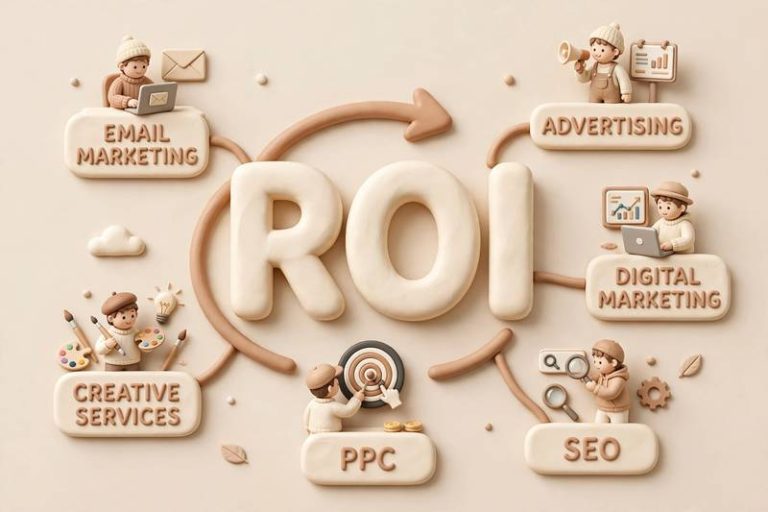
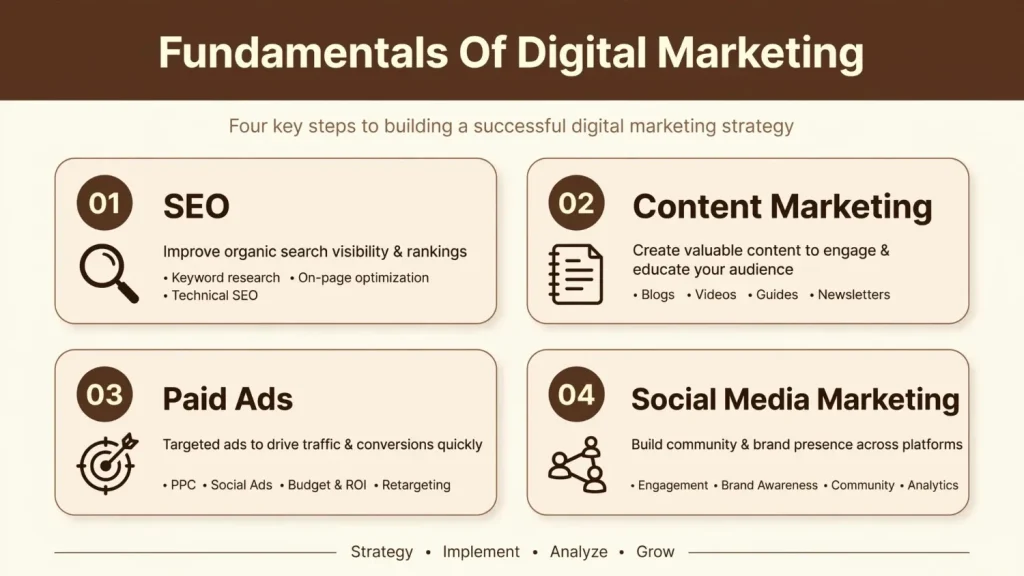
Additionally With the growth of the internet, digital marketing has become a vital part of modern business.
Digital marketing uses online channels to reach and engage customers.
Popular digital marketing channels include:
Search Engine Optimization (SEO)
SEO helps websites rank higher on search engines and attract organic traffic.
Content Marketing
Moreover, content marketing focuses on creating valuable content that educates and engages audiences.
Examples include:
posts
Articles
Videos
Infographics
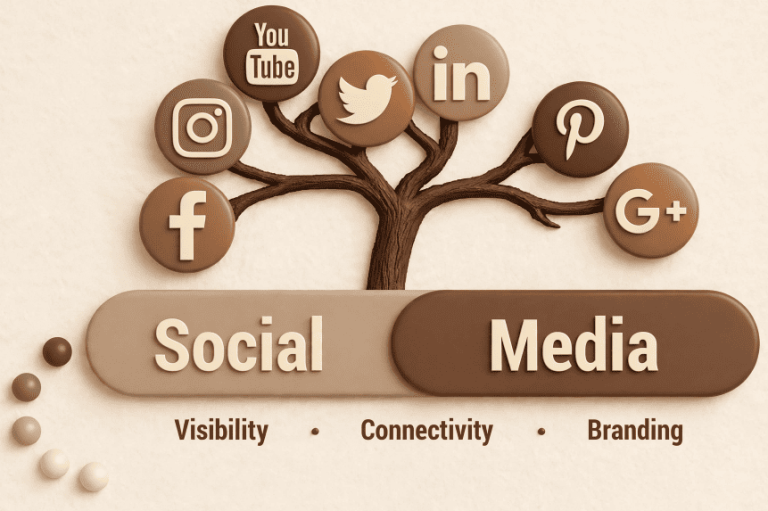
Social Media Marketing
Businesses use social media platforms to connect with audiences and promote products.
Popular platforms include:
Facebook
Instagram
LinkedIn
YouTube
Email Marketing
Email marketing helps businesses communicate directly with customers and nurture relationships.
Pay-Per-Click Advertising (PPC)
PPC advertising allows businesses to display ads and pay only when users click them.
Marketing Strategy
Moreover, a marketing strategy is a long-term plan designed to achieve business goals through effective marketing activities.A successful marketing strategy typically includes:
Business objectivesTarget audience
• Market positioning
• Marketing channels
• Budget allocation
• Performance metrics
Having a clear strategy helps businesses stay focused and achieve better results.
Customer Relationship Management (CRM)
Customer Relationship Management involves managing interactions with customers throughout their journey.
CRM helps businesses:
• Improve customer satisfaction
• Increase retention
• Personalize communication
• Generate repeat sales
Building strong relationships often leads to long-term business growth.
Marketing Metrics and Performance Measurement
Moreover, measuring marketing performance is essential for understanding what works and what needs improvement.
Common marketing metrics include:
Website Traffic = Measures the number of visitors to a website.
Conversion Rate = Shows the percentage of visitors who complete a desired action.
Customer Acquisition Cost (CAC) = Calculates the cost of acquiring a new customer.
Return on Investment (ROI)= Measures the profitability of marketing campaigns.
Customer Lifetime Value (CLV) =Estimates the total revenue generated from a customer over time.Tracking these metrics helps businesses optimize marketing efforts.
Frequently Asked Questions (FAQs) : Fundamental digital marketing
Ready to Grow Your Business?
Let GrowUp__Digital help you with SEO, PPC, Growth Marketing, and more.