How to Measure Digital Marketing ROI

Introduction
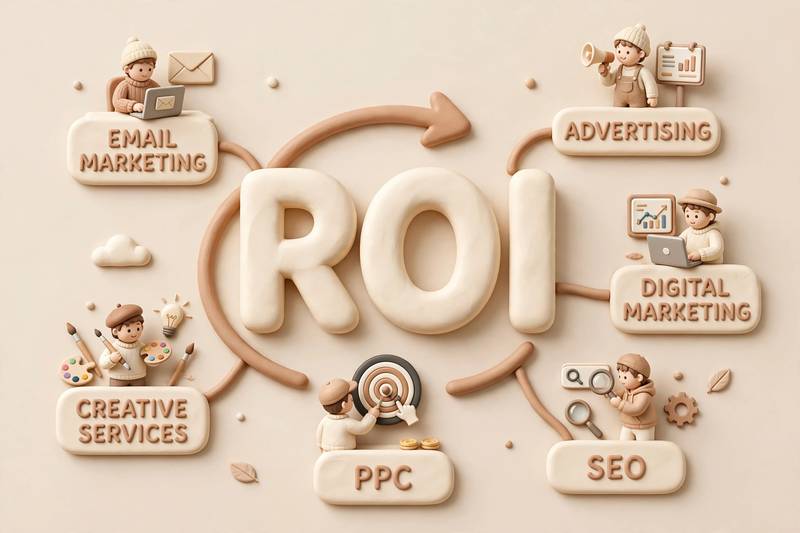
Digital marketing ROI shows whether the money spent on digital marketing is giving good results. It helps businesses understand which marketing activities, such as SEO, Google Ads, Meta Ads, and social media, are bringing leads, sales, transactions, and revenue.
How It Grows Your Business
⁍Track marketing costs
⁍ Measure leads and sales
⁍Track customer transactions
⁍ Find the best-performing campaigns
⁍ Reduce wasted marketing spend
⁍ Reduce wasted marketing spend
Improve future marketing decisions
How to Measure Digital Marketing ROI
You can measure digital marketing ROI in simple steps:
Set your marketing goal – Decide what you want to achieve.
Track your investment – Note your advertising and marketing costs.
rack conversions – Measure leads, sales, sign-ups, or transactions.
Measure revenue – Find out how much revenue your campaigns generated.
Calculate ROI – Compare your marketing investment with the revenue or profit generated.
Improve your strategy – Focus more on campaigns that give better results.
What Is Digital Marketing ROI?
Digital marketing ROI shows how much return or profit a business gets from its digital marketing investment. It helps you understand whether your marketing campaigns are generating good results.
How to Measure Digital Marketing ROI
ROI = (Return − Marketing Investment) ÷ Marketing Investment × 100
Example
Marketing Investment = ₹20,000
Revenue Generated = ₹50,000
Return = ₹30,000
ROI = 150%
This means the business generated a 150% ROI from its marketing investment
Why Is Digital Marketing ROI Important?
⁍Measure marketing performance
⁍Understand revenue and profit
⁍Find the best-performing campaigns
⁍ Use the marketing budget effectively
⁍ Reduce unnecessary spending
Important: Revenue and profit are not the same. When measuring ROI, consider advertising costs, tools, content costs, and other marketing expenses
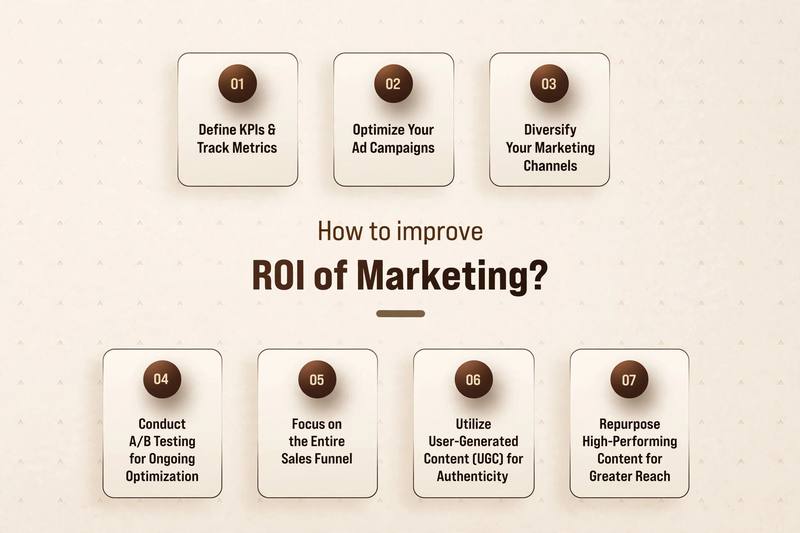
Why Is Measuring Digital Marketing ROI Important?
Measuring digital marketing ROI helps businesses understand whether their marketing investment is producing good results. It shows which campaigns are working and where the budget should be spent.
Key Benefits
Better Budget Allocation: Spend more money on campaigns that give better results.
Identify Best Campaigns: Find which campaigns generate more leads, sales, or revenue.
Reduce Wasted Spend: Avoid spending money on campaigns that do not perform well.
Make Better Decisions: Use real data to improve marketing decisions.
Improve Future Campaigns: Use past results to create more effective campaigns.
Key Metrics to Measure Digital Marketing ROI
Tracking the right metrics is important for understanding your digital marketing performance and ROI.
Important Metrics
Conversion Rate: The percentage of visitors who complete a desired action, such as a purchase or sign-up.
Cost Per Lead (CPL): The average amount spent to generate one lead.
Customer Acquisition Cost (CAC): The total cost of acquiring one new customer.
Return on Ad Spend (ROAS): Shows how much revenue you earn for every amount spent on advertising.
Customer Lifetime Value (CLV): The total value a customer is expected to generate during their relationship with a business.
Click-Through Rate (CTR): The percentage of people who click on an ad or link after seeing it.
Cost Per Click (CPC): The average amount paid for each click on an online advertisement.
Revenue: The total income generated from marketing activities, such as sales or transactions.
Leads Generated: The number of potential customers gained through marketing campaigns.
Sales: The number or value of products or services sold through marketing efforts.
How to Measure Digital Marketing ROI Step by Step
Measuring digital marketing ROI becomes easier when you follow a clear step-by-step process. These steps help you track your investment, conversions, revenue, and overall marketing performance.
Step 1: Define Your Marketing Goals
First, decide what you want to achieve through digital marketing.
⁍ Increase sales
⁍ Generate more leads
⁍ Increase website traffic
⁍ Get more customers
⁍ Increase brand awareness
Step 2: Track Your Marketing Investment
Calculate all the costs related to your marketing activities.
⁍Advertising spend
⁍Marketing software and tools
⁍ Increase website traffic
⁍Email marketing costs
⁍ Other campaign expenses
Step 3: Track Conversions
Track the actions that show customer interest or business results.
⁍Purchases
⁍Phone calls
⁍ Form submissions
⁍Sign-ups
⁍ Downloads
Step 4: Calculate Your Revenue
Find out how much revenue was generated from your marketing campaigns. Use tools such as Google Analytics, Google Ads, or your CRM to track sales and transactions.
Step 5: Apply the ROI Formula
Use the basic ROI formula:
ROI = (Return − Marketing Investment) ÷ Marketing Investment × 100
Example:
If you spend ₹20,000 on marketing and generate ₹50,000 in revenue:
ROI = (₹50,000 − ₹20,000) ÷ ₹20,000 × 100 = 150%
Step 6: Compare Different Marketing Channels
Compare the performance of different channels, such as:
SEO
Google Ads
Meta Ads
Email Marketing
Social Media
This helps you identify which channel provides better results.
Step 7: Optimize Your Strategy
Focus more on campaigns and channels that generate better ROI. Reduce spending on low-performing campaigns and use your data to improve future marketing activities.
Important Tools to Measure Digital Marketing ROI
Different tools help us track website traffic, clicks, conversions, keywords, and campaign performance. These tools are very useful for measuring digital marketing ROI.
1. Google Analytics 4 (GA4)
GA4 helps us check website traffic, user behavior, and conversions. It is a very useful tool for beginners to understand how users interact with a website.
2. Google Ads
Google Ads helps us check ad performance, clicks, traffic, conversions, and ad spend. It shows how well our paid advertising campaigns are performing.
3. Google Search Console (GSC)
GSC helps us track organic clicks, impressions, keywords, and website performance in Google Search. It is useful for understanding how people find our website through search engines
4. Meta Ads Manager
Meta Ads Manager is used to measure the performance of Facebook and Instagram ads. It helps us track reach, clicks, conversions, and ad spend.
5. Google Tag Manager (GTM)
Google Tag Manager helps us set up and manage tracking for clicks, forms, conversions, and other user actions without making frequent changes to website code.
6. CRM
A CRM helps track the customer journey from lead → customer → sale → revenue. It helps businesses understand which marketing activities are generating actual customers and sales.
Why Are These Tools Important?
These tools help businesses track traffic, clicks, conversions, leads, sales, transactions, and revenue. This makes it easier to understand and improve digital marketing ROI.
Frequently Asked Questions (FAQs)
Ready to Grow Your Business?
Let GrowUp__Digital help you with SEO, PPC, Growth Marketing, and more.